
Why Your Wrists Are Begging You to Stretch
Stretching exercises for wrist health are one of the simplest things you can do to stay pain-free at your desk — and most people skip them entirely.
Here are the most effective wrist stretches you can start today:
- Prayer Stretch — palms together, lower hands toward waist, hold 15-30 seconds
- Wrist Flexor Stretch — arm extended, palm up, gently pull fingers back, hold 15-30 seconds
- Wrist Extensor Stretch — arm extended, palm down, bend wrist downward, hold 15-30 seconds
- Wrist Rotations — rotate wrist clockwise and counter-clockwise, 10 reps each direction
- Side-to-Side Bends — move hand left and right at the wrist, 10-20 reps
- Median Nerve Glide — straighten elbow, bend wrist back while turning palm outward
- Fist Opener — make a fist, then spread fingers wide, repeat 10 times
Think about what your hands do every day. Typing, clicking, scrolling, gripping — it adds up fast.
All that repetitive motion tightens the muscles and tendons in your forearms and wrists. Over time, that tightness turns into stiffness, then aching, then real pain that interrupts your work and sleep.
The good news? A few minutes of targeted stretching can make a real difference. Research shows that regular wrist stretching increases range of motion, reduces muscle stiffness, and lowers your risk of conditions like carpal tunnel syndrome and tendonitis.
This guide walks you through the best stretches, how to do them correctly, and how to build them into your daily routine — whether you’re at a desk all day or just starting to notice some tension.
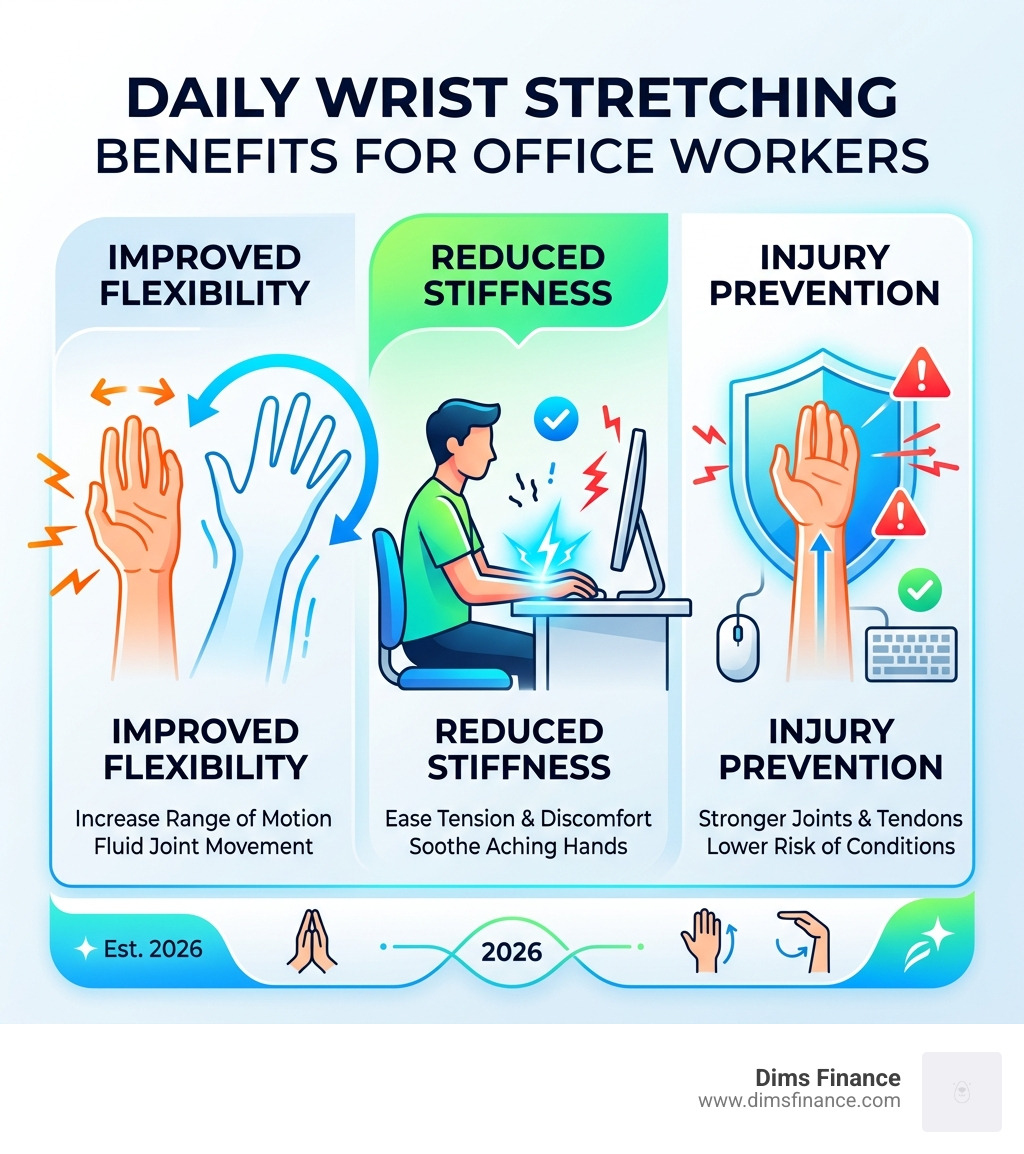
Why Stretching Exercises for Wrist Health are Essential
As we move through April 2026, the landscape of work continues to shift toward digital environments. While our minds are busy navigating spreadsheets and code, our bodies—specifically our wrists—are bearing the brunt of this sedentary lifestyle. We often take our wrists for granted until that first sharp twinge or dull ache makes it impossible to ignore.
Why should we care so much about stretching exercises for wrist health? To put it bluntly, the statistics are eye-opening. Around one in every two adults in the United States lives with a musculoskeletal condition. These conditions are the leading cause of disability nationwide. While we often hear about ACL injuries (around 400,000 annually) or hip replacements (over 450,000 annually), wrist injuries from repetitive strain are just as pervasive and can be just as debilitating to your career and quality of life.
Preventing the “Nagging” Injury
Most wrist issues don’t happen because of a single traumatic event. Instead, they are “motion repetitive” or overuse injuries. It’s that nagging pain that stays with you for several weeks, restricting your ability to work out, cook, or even send an email. By performing regular stretches, we keep the eight small carpal bones and the ligaments connecting them supple and fluid.
Stretching helps manage and prevent:
- Carpal Tunnel Syndrome: Compression of the median nerve that causes numbness and tingling.
- Tendonitis: Inflammation of the tendons from repetitive gripping or typing.
- General Stiffness: The loss of range of motion that makes everyday tasks feel like a chore.
When we stretch, we aren’t just pulling on tissue; we are encouraging blood flow. Increased circulation brings vital nutrients to the nerves and tendons, helping them recover from the micro-trauma of a ten-hour workday. We’ve seen that consistent movement can lead to a significant reduction in pain—some programs report up to a 68% reduction in pain within just 12 weeks of starting regular wrist exercises.
For a deeper dive into why this matters for your specific setup, check out our guide on How To Reduce Typing Related Wrist Strain Before It Becomes A Problem/.
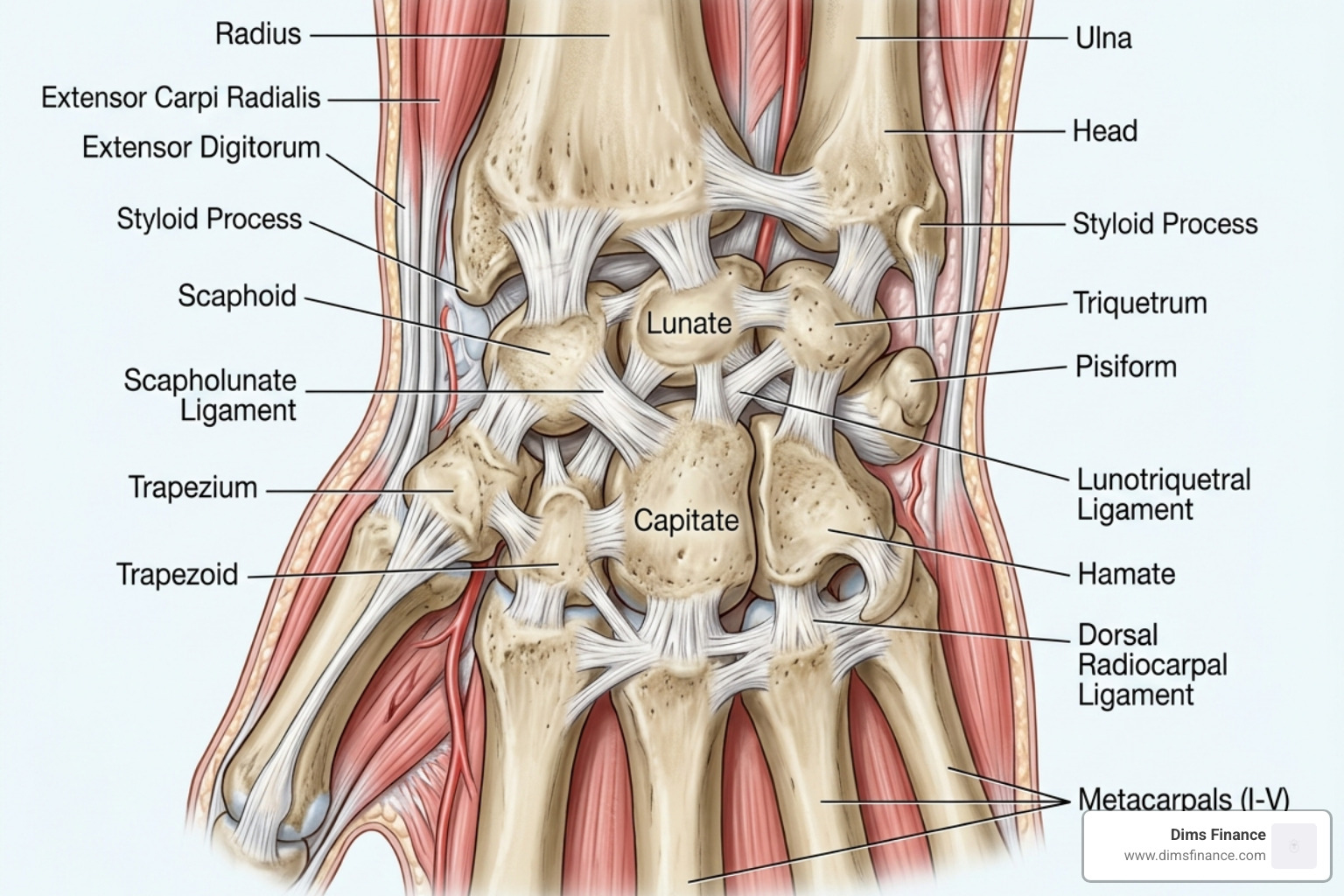
According to Stretching exercises for the wrists | HealthLink BC, these movements are essential for keeping the structures of the hand gliding freely. Without this “glide,” the friction between tendons can lead to the inflammation we all want to avoid.
Top 7 Stretching Exercises for Wrist Flexibility and Pain Relief
If you’re ready to take control of your joint health, we’ve compiled the “Holy Grail” of wrist movements. These exercises are recommended by physical therapists and hand specialists alike for their effectiveness and ease of use. You don’t need a gym or fancy equipment—just a few minutes at your desk.
1. The Prayer Stretch
This is the classic “reset” button for your wrists. It targets the underside of the wrist and the forearm flexors, which are often the tightest muscles in office workers.
- How to do it: Place your palms together in front of your chest, just below your chin. Slowly lower your hands toward your waistline while keeping your palms pressed together. Stop when you feel a moderate stretch.
- Hold for: 15-30 seconds.
2. Wrist Flexor Stretch
This move specifically targets the muscles that allow you to grip and type. It’s a vital part of any Science Backed Guide To Rsi Prevention/.
- How to do it: Extend one arm in front of you with the palm facing up. Use your other hand to gently pull your fingers back toward your body.
- Hold for: 15-30 seconds.

3. Wrist Extensor Stretch
The counterpart to the flexor stretch, this addresses the muscles on the top of your forearm.
- How to do it: Extend your arm with the palm facing down. Point your fingers toward the floor and use your opposite hand to apply gentle pressure to the back of your hand, bending the wrist further.
- Hold for: 10-30 seconds.
4. Wrist Rotations (Circles)
Simple but effective, rotations help maintain the range of motion in the joint.
- How to do it: Make a loose fist and rotate your wrists in a circular motion. Do 10 circles clockwise and 10 circles counter-clockwise.
- Pro tip: Keep your elbows tucked into your sides to ensure the movement comes purely from the wrist.
5. Side-to-Side Bends (Windshield Wipers)
This movement targets the lateral flexibility of the wrist.
- How to do it: Place your hand flat on a table. Without moving your forearm, move your hand side-to-side as if you were waving or mimicking windshield wipers.
- Repeat: 10-20 times.
6. Median Nerve Glide
Nerve glides are unique because they don’t just stretch muscle; they help the nerve move smoothly through its “tunnel.” This is particularly helpful for those worried about carpal tunnel.
- How to do it: Start with a fist, then straighten your fingers. Extend your thumb out to the side. Turn your palm up and gently pull your thumb back with your other hand.
- Caution: Never force a nerve glide; it should feel like a light tension, not a “stretch.”
7. Open Book Rotations
While this feels like a shoulder stretch, it’s actually a “total chain” movement. It addresses the tension in the neck and shoulders that often contributes to wrist pain.
- How to do it: Lie on your side with knees bent. Reach both arms out in front of you, palms touching. Slowly lift the top arm and reach it behind you, following it with your eyes, as if you are opening a book.
- Benefit: This alleviates the “rounded shoulder” posture that puts extra pressure on the nerves leading to your hands.
For more variations, 10 Stretches to Help Your Wrists and Hands offers a great list of complementary finger and thumb moves.
Step-by-Step Guide to the Prayer Stretching Exercises for Wrist
The Prayer Stretch is so fundamental that we want to ensure you have the form perfect. Incorrect form can actually put unnecessary pressure on the carpal tunnel.
- The Start: Sit or stand tall. Bring your palms together in a “prayer” position directly in front of your face. Your elbows should be pointing out to the sides.
- The Descent: Slowly lower your hands toward your belly button. Keep your palms in constant contact. Do not let the heels of your hands pull apart!
- The Sweet Spot: Stop when your hands reach waist height or when you feel a stretch along the bottom of your wrists and forearms.
- The Duration: Hold this for 15 to 30 seconds. Breathe deeply. We recommend repeating this 2-4 times.
If you find this stretch uncomfortable, you might be dealing with existing strain. We recommend looking into 7 Proven Solutions For Typing Without The Ouch/ to help bridge the gap between pain and flexibility.
How to Perform the Wrist Extensor Stretching Exercises for Wrist
The wrist extensors (the muscles on the top of your forearm) are often overworked because they have to hold your hands up while you type.
- Extension: Reach your right arm straight out in front of you, level with your shoulder.
- The Bend: Turn your palm down toward the floor. Drop your fingers so they point toward the ground.
- The Assist: Use your left hand to grasp the back of your right hand. Gently pull it toward your body.
- The Variation: Once you are comfortable with your fingers straight, try making a loose fist and then performing the stretch. This targets the tendons slightly differently.
- The Hold: Maintain this for 10-30 seconds. Repeat on the other side.
According to 11 Exercises and Stretches for Wrist Pain, you should only perform these if your pain is at a 3 or 4 out of 10. If it’s higher, you need rest, not stretching. To prevent this tightness from returning, it’s also crucial to maintain a Mastering The Neutral Wrist Position For Your Keyboard Setup/.
Best Practices for Safe and Effective Wrist Stretching
We want you to get the most out of your stretching exercises for wrist health without causing more harm. Stretching is a “slow and steady” game, not a “no pain, no gain” situation.
- Warm Up First: Never stretch “cold” tendons. If you’ve been sitting still for hours, move your hands around, do some air-typing, or even wash your hands in warm water for five minutes to increase tissue elasticity.
- Avoid Pain: A stretch should feel like a “mild tension” or “tolerable discomfort.” If you feel sharp, stabbing, or electric-shock sensations, stop immediately.
- Consistency Over Intensity: Stretching once a week for an hour won’t do much. Stretching for five minutes every day is life-changing.
- Controlled Movements: Avoid “bouncing” or jerky movements (ballistic stretching). This can cause micro-tears in the ligaments.
- Breathe: It sounds simple, but many people hold their breath when they feel tension. Deep breathing helps your nervous system relax, allowing the muscles to let go.
As noted in The Top 6 Wrist Stretches to Improve Wrist Flexibility and Prevent Injury, a pound of prevention is worth an ounce of cure. Don’t wait for the injury to happen before you start these habits. For a complete look at how to set up your life for success, check out The Complete Office Ergonomics Guide To Stop Rsi Before It Starts/.
Frequency and Duration for Daily Wrist Routines
How often is “enough”? If you are a desk worker, we recommend a “micro-break” strategy.
- The 1-2 Hour Rule: Aim to do 10-20 repetitions of a range-of-motion exercise (like rotations) every 1 to 2 hours.
- The 30-Second Hold: For static stretches (like the Prayer Stretch), hold for 30 seconds. This gives the fascia enough time to actually lengthen.
- The Daily Minimum: Try to complete a full circuit of the 7 stretches mentioned above at least twice a day—once in the morning to “wake up” the joints and once in the evening to undo the day’s tension.
For those in high-intensity typing jobs, we have more specific advice on How Employees Can Stop Repetitive Strain Injuries Before They Start/.
Frequently Asked Questions about Wrist Stretches
When should I see a doctor for wrist pain?
We are all for self-care, but we also know when it’s time to call in the pros. You should consult a healthcare provider if:
- You experience numbness or a “pins and needles” sensation that doesn’t go away.
- There is visible swelling or bruising.
- The pain is severe enough to wake you up at night.
- You’ve been doing these exercises for 2-3 weeks with no improvement.
- The pain is the result of a fall or sudden impact (possible fracture).
Maintaining a Mastering The Neutral Wrist Position For Your Keyboard Setup/ is a preventive measure, but it cannot fix a structural injury once it has occurred.
Can wrist stretches help with Carpal Tunnel Syndrome?
Yes, but with caveats. Stretching exercises for wrist health, specifically “nerve glides,” help the median nerve move more freely through the carpal tunnel. This can reduce the pressure and inflammation that causes symptoms. However, if your carpal tunnel is caused by severe inflammation or structural issues, aggressive stretching can sometimes make it worse. Always start gently. For more on this, read The Keyboard Warriors Guide To Preventing Repetitive Strain/.
Are there specific stretches for office workers?
Absolutely. Beyond the standard stretches, office workers can use their environment to their advantage:
- The Desk Press: Place your palms face up under your desk and press upward. This builds forearm strength and provides a counter-stretch to typing.
- Figure Eights: Interlace your fingers and move your hands in a figure-eight motion. This is great for “greasing the groove” of the wrist joint during a quick break.
- Thumb Resistance: Use your opposite hand to gently push your thumb in various directions while resisting with the thumb itself. This builds stability.
We offer more specific advice on how to integrate these into your workday in our Typing Posture Tips To Prevent Digital Injuries/.
Conclusion
At Dims Finance, we believe that your most valuable asset is your ability to work comfortably and productively. Your wrists are the tools that make your career possible, and they deserve a little bit of maintenance.
By incorporating these stretching exercises for wrist health into your daily routine, you aren’t just preventing pain; you are investing in your long-term mobility. Whether it’s the Prayer Stretch during a conference call or a quick set of rotations between emails, these small habits add up to a significant difference in your ergonomic health.
Don’t wait for the ache to become an injury. Start your stretching routine today, and for the ultimate roadmap to a pain-free workspace, don’t forget to explore The Complete Office Ergonomics Guide To Stop Rsi Before It Starts/. Your future self—and your wrists—will thank you!