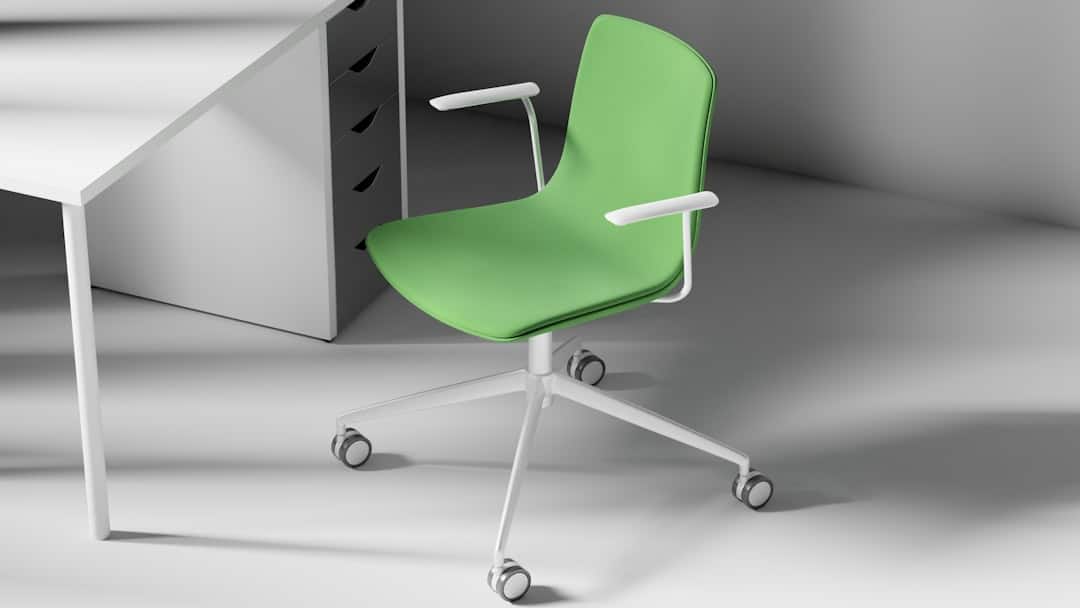
Why an Ergonomic Chair Can Change How You Work and Feel
An ergonomic chair is a seat designed to support your body’s natural posture — reducing pain, fatigue, and long-term injury from hours of sitting.
Quick answer: What is an ergonomic chair?
- Supports your spine — adjustable lumbar support keeps your lower back aligned
- Reduces pain — designed to relieve pressure on your hips, back, and neck
- Fully adjustable — seat height, armrests, tilt, and depth all adapt to your body
- Boosts productivity — less discomfort means better focus and longer work sessions
- Built to last — top models carry warranties of up to 12 years
If you spend hours at a desk — whether coding, writing, or gaming — your chair matters more than almost any other piece of equipment you own.
Here’s the uncomfortable truth: most standard office chairs are not built with your body in mind. They’re built to a price point. And over time, that mismatch between chair and body creates real damage — back pain, poor circulation, wrist strain, and repetitive stress injuries (RSI).
One Reddit user put it bluntly when describing years of cheap office chairs: “They fell apart after 5 years and the pleather was horrid” — and that experience is more common than most people admit.
The good news? A well-chosen ergonomic chair doesn’t just reduce pain. It actively supports your posture, encourages healthy movement, and can make a measurable difference in how you feel by the end of a long workday.
This guide covers everything — from key features and materials to budget picks, body-type fit, and how to actually adjust your chair once you have it.
The Health Benefits of Investing in an Ergonomic Chair
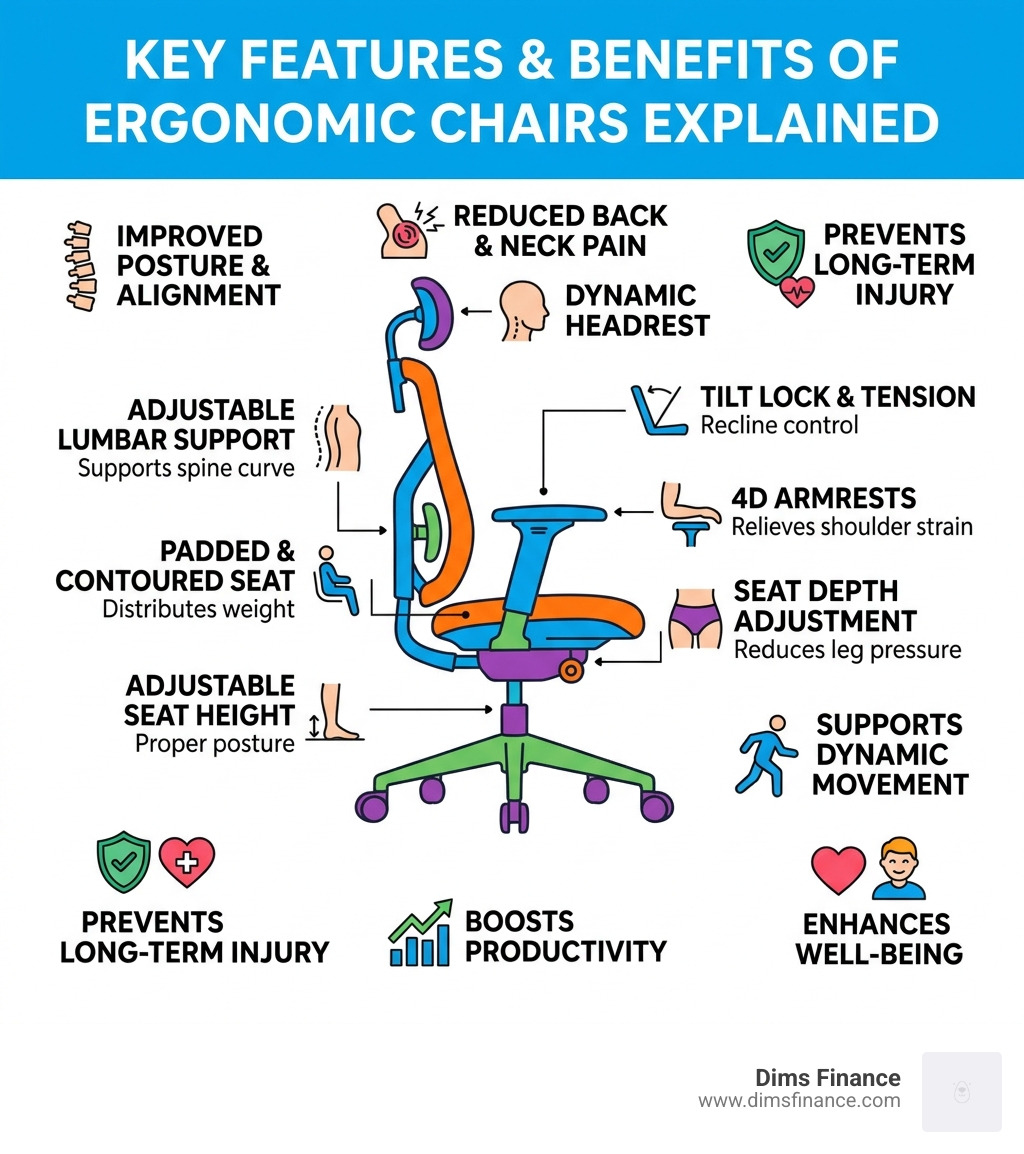
In our work at Dims Finance, we often see how physical discomfort translates into financial and professional friction. When your back is throbbing, your focus slips. Investing in an ergonomic chair isn’t just about luxury; it’s about health preservation and RSI prevention.
The primary goal of ergonomics is to mitigate workplace stressors. By using empirical data from biomechanics and anthropometry, designers create chairs that support the human frame. One of the most critical benefits is proper spinal alignment. A high-quality chair reinforces the natural “S” curve of your spine, specifically supporting the lumbar (lower back) and sacral regions. This prevents the “C-slouch” that leads to herniated discs and chronic fatigue.
Furthermore, these chairs improve blood circulation. Traditional chairs often have hard edges that cut off circulation at the back of the knees—a phenomenon known as “the waterfall effect.” Ergonomic designs use contoured seat pans to distribute weight evenly, ensuring that your legs don’t go numb during a deep-work sprint.
Scientific research on pressure distribution shows that high-end models, like the Embody Chair, use a matrix of pixels to conform to your micro-movements. This reduces pressure buildup, which is a major factor in long-term comfort. For those interested in how movement impacts health, check out our guide on Finding The Perfect Active Sitting Office Chair For Your Back. By encouraging “active sitting,” you can mitigate the sedentary risks of office work, boosting both your metabolism and your productivity.
Essential Features for Long-Term Support
When shopping for an ergonomic chair, it’s easy to get distracted by flashy designs. However, true support comes from specific, adjustable components that allow the chair to become an extension of your body.
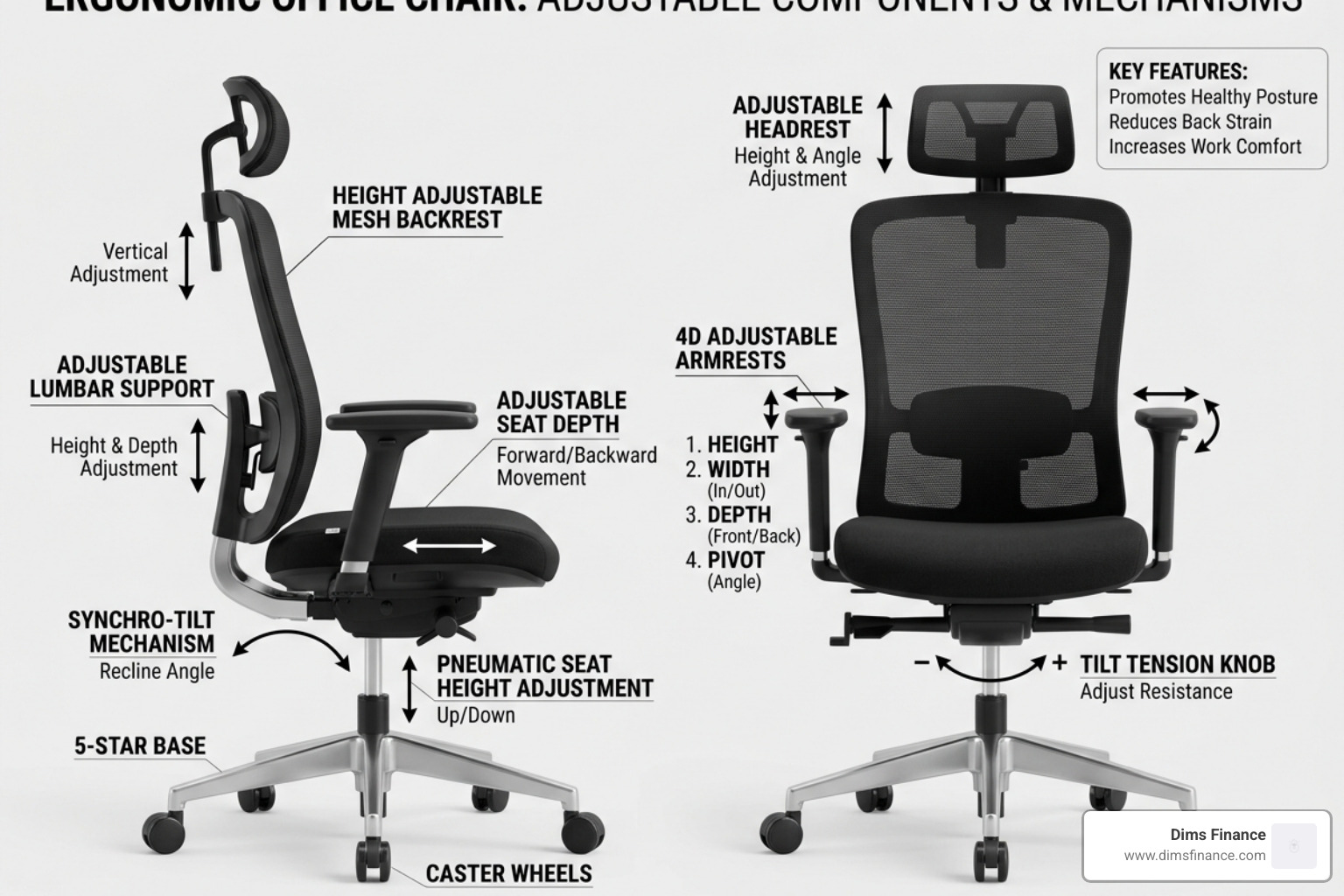
To help you navigate the sea of options, we’ve broken down the must-have features. If you’re looking for specific recommendations, our list of the 10 Best Chairs For Sitting Through Your Longest Workdays is a great place to start.
| Feature | Basic Chair | Advanced Ergonomic Chair |
|---|---|---|
| Lumbar Support | Fixed or non-existent | Height and depth adjustable; often integrated into the frame |
| Armrests | Fixed height | 4D adjustment (height, width, depth, and pivot) |
| Seat Depth | Static | Sliding seat pan to accommodate different leg lengths |
| Tilt Mechanism | Simple recline | Synchronous tilt (backrest and seat move in harmony) |
| Backrest | One-size-fits-all | Responsive materials that flex with your spine |
Key Features of a High-Performance Ergonomic Chair
High-performance chairs go beyond simple levers. They utilize dynamic recline systems and point-based pressure distribution. For example, the Aeron Chair uses 8Z Pellicle mesh, which features eight zones of varying tension to cradle the body.
Another innovation is responsive support technology. Some modern chairs, like the Cosm Mid Back Chair, feature an “Auto-Harmonic Tilt.” This mechanism automatically adjusts the tension based on your weight and posture, providing a weightless sensation without you ever having to touch a knob.
How to Adjust Your Ergonomic Chair for Maximum Comfort
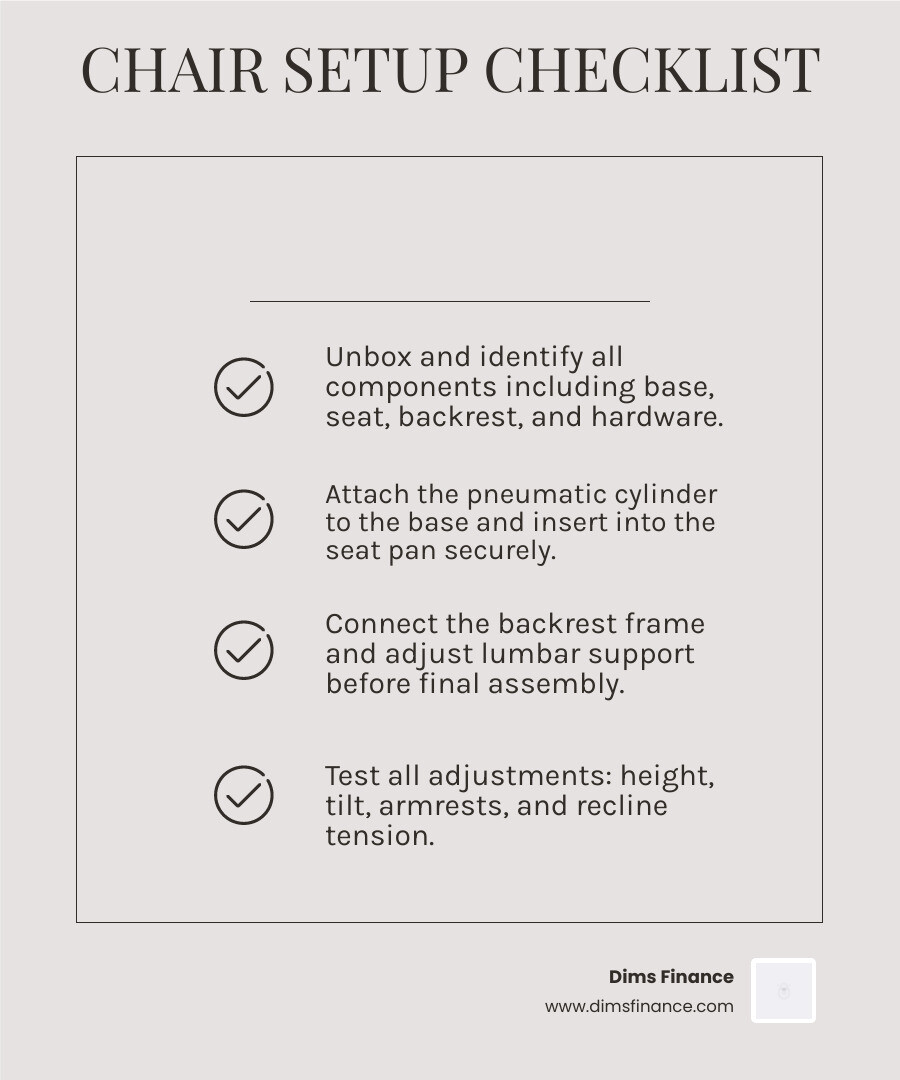
Buying the chair is only half the battle; you have to set it up correctly. Here is our step-by-step checklist for a perfect fit:
- Seat Height: Your feet should be flat on the floor with your knees at a 90-degree angle. If your desk is too high, use a footrest rather than dangling your legs.
- Seat Depth: There should be a two-to-three-finger gap between the edge of the seat and the back of your knees. This protects your circulation.
- Lumbar Support: Position the curve of the chair in the small of your back. If the chair has sacral support, ensure it sits right at the base of your spine to prevent your pelvis from rotating backward.
- Armrests: Your shoulders should be relaxed, and your elbows should form a 90-degree angle, resting lightly on the pads. This is vital for preventing wrist pain.
- Tilt Tension: Adjust the resistance so you can recline easily but don’t feel like you’re falling backward.
For more on staying mobile while seated, read our article on Active Sitting 101 And How To Burn Calories While You Work.
Material Science: Mesh vs. Traditional Upholstery
The material of your ergonomic chair affects more than just aesthetics—it dictates your thermal comfort and the chair’s longevity.
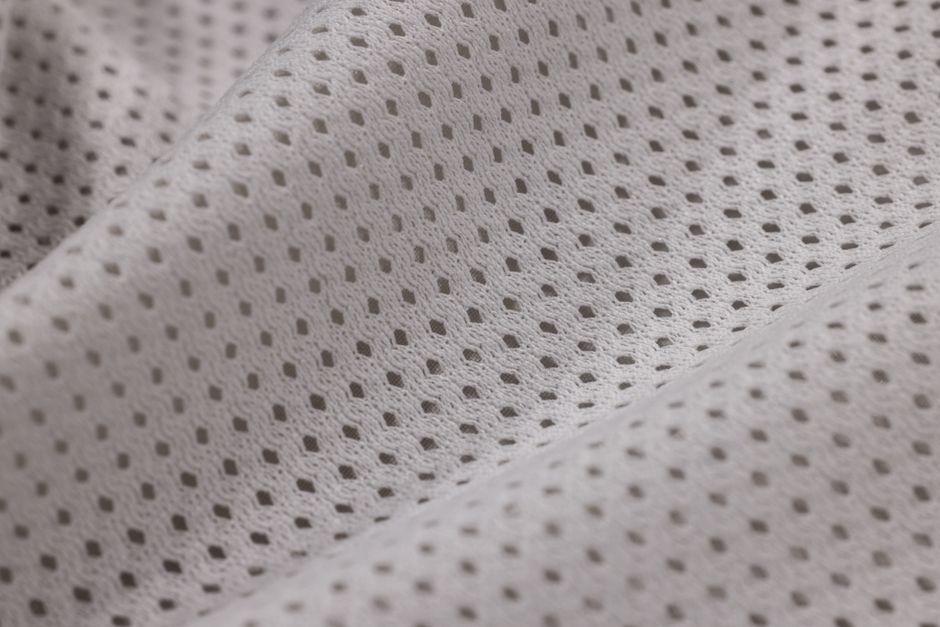
Mesh Chairs Mesh is the gold standard for breathability. In hot climates—like an Australian summer where temperatures can hit 45°C—traditional leather or foam can become “horrid” and sweaty. Mesh allows for constant airflow, keeping your core temperature regulated. High-quality meshes, such as the AireWeave used in the Mirra 2 Chair, are designed to distribute weight without sagging over time.
Fabric and Leather Traditional upholstery often offers a “cushier” feel. Some users find mesh too firm or “stiff” initially. If you prefer a softer seat, look for high-density foam or multi-layered fabric. For example, the Lino Chair uses a contoured seat pad that provides a more traditional feel while still offering advanced suspension in the backrest.
Sustainability Matters In 2026, material science is also about the planet. Many top-tier chairs are now pioneers in sustainability. The Verus Task Chair, for instance, meets strict VOC emission limits. Some models are made of up to 42% recycled materials and are 95% recyclable at the end of their life. Some even incorporate ocean-bound plastic into their frames, proving that high performance doesn’t have to come at an environmental cost.
Choosing a Chair for Your Specific Body Type
One of the biggest mistakes we see is people buying a chair based on a review without considering their own dimensions. A chair that feels like a cloud to a 5’5″ user might feel like a “torture device” to someone who is 6’4″.
When selecting your seat, pay close attention to the weight capacity. While many standard chairs max out at 200-250 lbs, performance models like the Cosm or Verus support up to 350 lbs. This higher limit usually indicates a more robust internal structure and higher-quality gas cylinders.
Before you pull the trigger, read our guide: Dont Take It Sitting Down A Guide To Buying Your Next Ergonomic Chair.
Considerations for Different Heights:
- Tall Users: Look for a high backrest and a seat depth that extends to at least 18 inches. The Aeron Chair actually comes in three sizes (A, B, and C) to ensure a perfect fit for everyone from the 1st to the 99th percentile of body types.
- Petite Users: Ensure the seat height can drop low enough for your feet to touch the floor (usually around 16 inches). A seat that is too deep will force you to slouch to reach the backrest.
Selecting an Ergonomic Chair for Unique Sitting Habits
We all have that one “weird” way we sit. Maybe you like to tuck one leg under you, or you prefer to sit cross-legged.
If you are a “fidgeter” or an active sitter, you need a chair with a flexible frame and a wide seat pan. The Embody Chair is famous for its “Pixelated Support” which mimics the human back and allows for a lot of side-to-side movement. For those who want “weightless support” without fiddling with levers, the Cosm’s Auto-Harmonic tilt is a game-changer—it reacts to your posture changes instantly.
Setup, Trial Periods, and Maintenance
Investing in a high-end ergonomic chair is a significant financial decision. To make it easier, many brands now offer seasonal savings. For example, Eureka Ergonomic often runs Spring Clearance Events with up to 60% off, and brands like Sunaofe offer significant discounts on their Morph editions.
Trial Periods and Warranties
Never buy a chair you can’t return. Many premium manufacturers offer a 30-day or even a 60-day risk-free trial. This is crucial because your body often needs 1-2 weeks to adjust to a truly ergonomic position. If you’ve spent years slouching, a chair that forces you into a “correct” posture might actually feel uncomfortable at first. Stick with it—the “stiffness” usually fades as your muscles adapt.
Furthermore, look for a 12-year warranty. A chair is a “Buy It For Life” (BIFL) item. If you’re on a budget, consider refurbished options. Many companies specialized in reconditioning high-end chairs from corporate offices, offering them at 40-60% off the retail price.
Maintenance Tips
To ensure your chair lasts a decade or more:
- Vacuum Mesh: Dust and skin cells can clog the weave. A quick vacuum once a month keeps it fresh.
- Check the Bolts: Every six months, give the main bolts a quick tighten.
- Caster Care: If you have hardwood floors, ensure you are using “Quiet Roll” or soft casters to prevent scratching and reduce vibration.
Frequently Asked Questions about Ergonomic Seating
What is the best chair for sitting all day?
The consensus among experts and users is that an ergonomic chair with a synchronous tilt and adjustable lumbar support is best. Models like the Aeron, Embody, and Steelcase Leap are frequently cited as the gold standards for 8-12 hour workdays because they prioritize spinal alignment and weight distribution.
Are mesh chairs better than leather for back pain?
Not necessarily. Back pain relief comes from the support structure (the lumbar and sacral tension), not the surface material. However, mesh is superior for temperature regulation. If you find mesh too firm, a fabric chair with a high-quality foam seat and a mesh back—like the Verus Task Chair—offers the best of both worlds.
How long should an ergonomic chair last?
A high-quality ergonomic chair should last at least 10 to 12 years. Premium brands back this up with decade-long warranties. If you find your chair’s “pleather” is peeling or the gas lift is sinking after just two years, it likely wasn’t a true ergonomic investment.
Conclusion
As we move through April 2026, the boundary between our “home” and “office” continues to blur. Whether you are working from a dedicated suite or a corner of your living room, your physical health is your most valuable asset.
At Dims Finance, we believe that pain-free productivity is the foundation of professional success. By choosing a chair that supports your unique body type and sitting habits, you aren’t just buying furniture—you’re investing in a future free from RSI and chronic back pain.
Ready to optimize the rest of your setup? Explore our full guide to office furniture for more tips on creating the ultimate workspace.