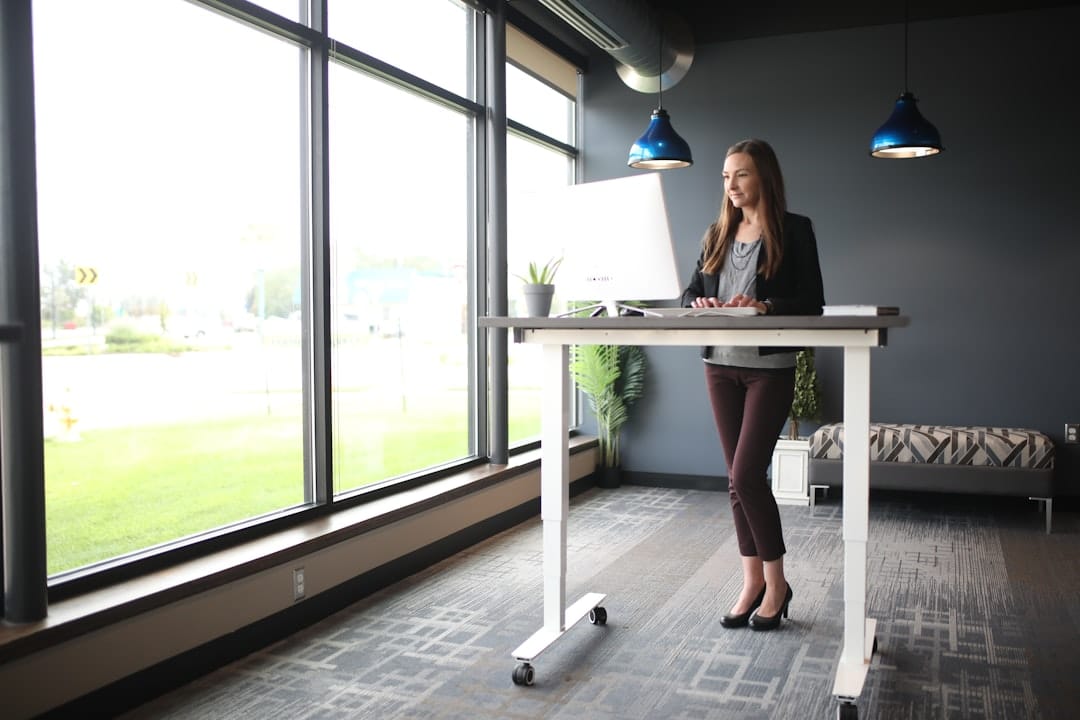
Why the Benefits of Standing Desk Posture Matter for Office Workers
The benefits of standing desk posture are real, measurable, and backed by science — here’s a quick summary:
- Better spinal alignment – standing reduces the forward head posture and spinal compression that builds up during long hours of sitting
- Less neck and shoulder pain – studies show neck discomfort drops significantly when workers switch to a standing desk
- Lower blood sugar spikes – standing for 180 minutes after lunch reduced post-meal blood sugar spikes by 43% in one study
- More energy and better mood – 87% of workers felt more energized after just one hour of standing at work
- Higher productivity – standing desk users in call centers were up to 50% more productive than their seated colleagues
- Reduced muscle fatigue – standing desk users showed significantly less fatigue in the levator scapulae (a key neck muscle) compared to those who sat
If you work at a desk for most of the day, your body is probably paying a price you haven’t fully noticed yet.
Office workers spend 70–80% of their working hours sitting. That’s not just uncomfortable — it’s linked to higher risks of obesity, diabetes, cardiovascular disease, and chronic musculoskeletal pain.
The good news? You don’t need a full fitness overhaul to start reversing the damage. Something as simple as changing your posture at your desk — alternating between sitting and standing — can make a meaningful difference.
Standing desk sales have soared in recent years, far outpacing conventional desks. And while some of the hype overstates the calorie-burning benefits, the posture and pain relief benefits are well-supported by research.
This article breaks down exactly what the science says, who benefits most, and how to set yourself up correctly to get the most out of standing at work.

5 Key Benefits of Standing Desk Posture for Your Spine
When we sit for eight hours a day, our spines often resemble a question mark more than a sturdy column. We slouch, we lean, and our lower back bears the brunt of our body weight in a compressed state. One of the primary benefits of standing desk posture is the natural decompression it offers the spine.

Standing encourages a neutral spine position. When you stand, your pelvis tilts slightly, which helps maintain the natural “S” curve of your back. This reduces the intradiscal pressure that often leads to herniated discs or chronic sciatica in long-term sitters. Furthermore, using monitor stands for better posture ensures that your gaze remains forward rather than downward, preventing the “C-curve” collapse of the upper back.
Recent scientific research on posture improvements indicates that even short bouts of standing can reset the musculoskeletal system, allowing the deep stabilizer muscles in your core and back to engage as they were designed to do.
Reducing Forward Head Posture and Neck Strain
If you’ve ever felt like your head weighs a hundred pounds by 3:00 PM, you’re likely experiencing “Tech Neck” or forward head posture. In clinical terms, this is measured by the craniovertebral angle (CVA). A smaller angle means your head is protruding further forward, putting massive strain on the cervical spine.
Research has shown that the benefits of standing desk posture include a measurable improvement in this angle. In one study, a group using standing desks saw their CVA increase from 45.31° to 46.77° after switching positions. This might seem like a small number, but for your neck muscles, it’s the difference between a restful day and a tension headache.
Specifically, standing reduces fatigue in the levator scapulae—the muscle that runs from your neck to your shoulder blade. In sitting groups, muscle fatigue in this area increased significantly, while the standing group actually saw a reduction in fatigue levels. Research on neck discomfort further confirms that while neck pain scores rose for those staying seated, they dropped for those who took a stand.
Alleviating Chronic Back and Shoulder Pain
Eight out of ten people will experience back pain at some point in their lives. Much of this is due to poor lumbar support and the constant nerve pressure caused by sedentary work. When we sit, we tend to round our shoulders and collapse our chests, which tightens the pectoral muscles and overstretches the upper back.
By transitioning to a standing position, you open up the chest and allow the shoulders to drop back into a relaxed, neutral position. This alleviates the “knots” many of us feel between our shoulder blades. If you find yourself struggling even while seated, checking out office chair tips for posture improvement can help bridge the gap between your sitting and standing intervals, providing much-needed musculoskeletal relief throughout the day.
Beyond Alignment: Metabolic and Cardiovascular Advantages
While we often focus on the bones and muscles, the benefits of standing desk posture extend deep into our internal chemistry. Prolonged sitting slows down the metabolism, making it harder for the body to regulate blood sugar and blood pressure.
Standing is an “active” posture. Even though you aren’t running a marathon, your legs and core are constantly making micro-adjustments to keep you upright. These small movements keep your circulation flowing and your enzymes active.
| Activity | Calories Burned per Hour |
|---|---|
| Sitting | 80 calories |
| Standing | 88 calories |
| Walking | 210 calories |
As you can see, standing isn’t a magic weight-loss pill—it only burns about 8 extra calories an hour compared to sitting. Over a three-hour window, that’s about 24 calories, or the equivalent of eating one medium-sized carrot. However, the metabolic benefits, such as improved insulin sensitivity and lower systolic blood pressure, are where the true health wins lie.
Maximizing the Benefits of Standing Desk Posture for Energy
Have you ever noticed that you get your best ideas while walking? Movement is a “brain reset.” For many, especially those managing ADHD, standing provides just enough physical stimulation to keep the mind focused on the task at hand. It prevents the “slump” that occurs when the body goes into a low-power mode during long periods of inactivity.
Using adjustable standing desks for work from home allows you to toggle your environment based on your energy needs. Statistics show that 87% of workers felt more energized and 66% felt more productive after spending just one hour standing. This energy boost is likely due to increased blood flow to the brain and the release of endorphins that come from engaging your muscles.
Impact on Blood Sugar and Heart Health
One of the most impressive 6 benefits of standing desks is the impact on post-meal blood sugar. Standing for 180 minutes after lunch has been shown to reduce blood sugar spikes by a staggering 43%. This is critical because frequent spikes in blood sugar are a major risk factor for Type 2 diabetes.
Furthermore, a six-month study of older adults found that using standing desks led to significant reductions in systolic blood pressure. By reducing the time spent sedentary, you improve the health of your vascular system, including better femoral artery function. This evidence-based guide to standing suggests that simply breaking up your sitting time can be a life-saving intervention for your heart over the long term.
Boosting Productivity and Mental Clarity
There is a common myth that you can’t focus while standing. On the contrary, the data suggests that the benefits of standing desk posture include a significant “performance boost.”
In a study involving call center employees, those who used standing desks were 45% to 50% more productive than their seated counterparts. This wasn’t because they were working faster, but because they were more engaged and had higher levels of task persistence. Standing increases alertness and cognitive processing efficiency, particularly for tasks that require quick decision-making or creative thinking.
Standing Desks: How They Can Help You Beat Inactivity notes that while fine motor skills (like high-speed data entry) might be slightly easier while seated for some, the overall gain in mental clarity and reduced fatigue usually outweighs any minor adjustments needed to work while standing.
How to Optimize Your Ergonomic Standing Setup
To truly reap the benefits of standing desk posture, you can’t just stand up and call it a day. If your desk is at the wrong height, you’ll simply trade back pain for wrist pain or neck strain.
Here is our expert checklist for the perfect setup:
- The 90-Degree Rule: Your elbows should be bent at roughly a 90 to 100-degree angle, with your forearms resting parallel to the desk. This prevents strain on the shoulders and wrists.
- Eye-Level Viewing: The top of your monitor should be at or slightly below eye level. This keeps your head balanced over your spine.
- The 20/8/2 Rule: This is the gold standard of office ergonomics. For every 30 minutes, sit for 20 minutes, stand for 8 minutes, and move or stretch for 2 minutes.
- Anti-Fatigue Mats: Standing on a hard floor for hours can lead to “noodle legs” and foot pain. A cushioned mat is essential for joint comfort.
- Wrist Alignment: Your wrists should remain flat and neutral. We often recommend ergonomic keyboard setups to prevent repetitive strain injuries (RSIs) while transitioning to a standing routine.
Learning how to set up workstation ergonomically for peak comfort is the first step. If you need storage as well, understanding why an adjustable height work table with drawers is a total game changer can help you maintain a clean, organized, and healthy workspace.
Frequently Asked Questions about Standing Desks
Does standing at a desk burn significantly more calories?
Not exactly. While standing is better than sitting, it only burns about 8 extra calories per hour (88 vs 80). If you stand for three hours, you’ve burned an extra 24 calories—about the same as eating a single carrot. For significant weight management, we recommend walking during lunch or using a treadmill desk, which burns about 210 calories per hour. The real value of standing is in your posture and metabolic health, not necessarily the calorie count.
What is the ideal sit-stand ratio for beginners?
Don’t try to stand for eight hours on your first day! You’ll end up with sore feet and a grumpy attitude. We suggest starting with 30-minute intervals—stand for 15 to 30 minutes, then sit for an hour. Gradually increase your standing time as your muscles adapt. The goal is to avoid staying in any static position for too long.
Are there any risks to standing all day?
Yes. Prolonged standing (more than 4 to 6 hours at a time) can lead to leg swelling, varicose veins, and lower extremity pain. It can also cause “blood pooling” in the legs if you don’t move around. The key is movement. Shift your weight, do some calf raises, and make sure you have supportive footwear. Experts suggest limiting continuous standing sessions to about 40 minutes before taking a sitting or walking break.
Conclusion
At Dims Finance, we believe that your workspace should work for you, not against you. The benefits of standing desk posture go far beyond just “not sitting.” By improving your craniovertebral angle, reducing muscle fatigue, and stabilizing your blood sugar, you are making a long-term investment in your health.
However, a desk is only one part of the puzzle. To truly prevent RSIs and boost well-being, you need a holistic approach that includes ergonomic keyboards, proper monitor placement, and consistent movement. Standing is a fantastic tool, but the best posture is always the next posture.
Ready to upgrade your work-life balance? Explore Ergonomic Office Furniture and find the tools that help you stand tall, work smart, and feel better every single day.