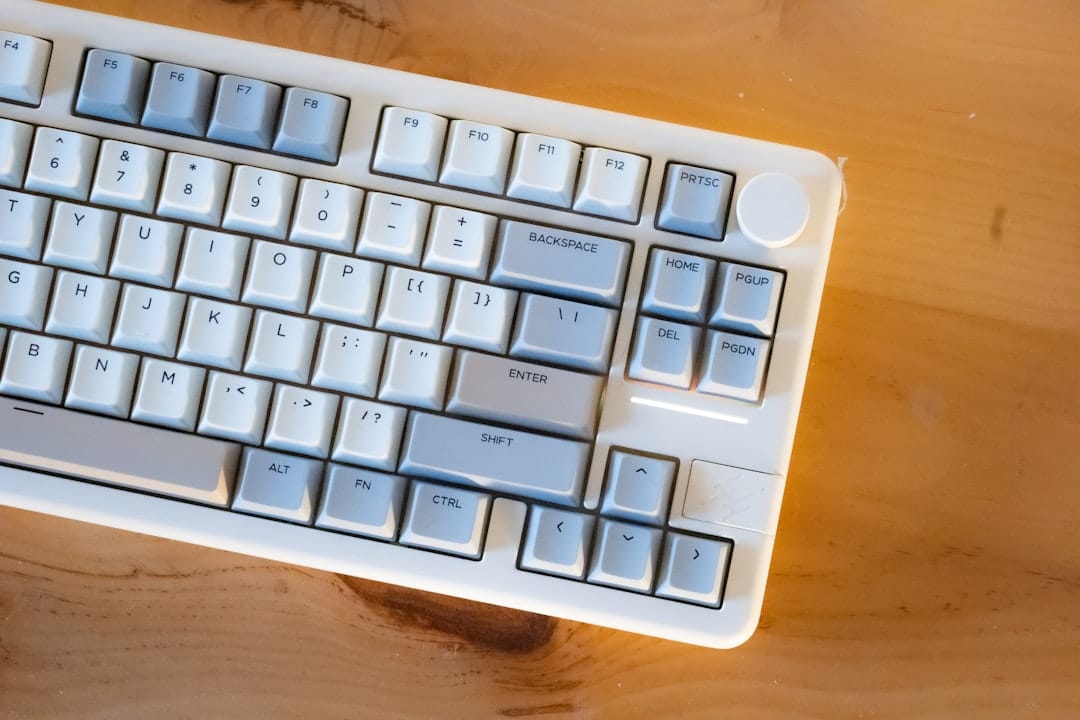
Your Keyboard Could Be Hurting You (Here’s What to Do About It)
The best keyboard for RSI prevention depends on your symptoms, budget, and how you type — but here are the top options most people should consider:
| Keyboard | Best For | Key Feature |
|---|---|---|
| Logitech Ergo K860 | Most office workers | Curved split design, plush wrist rest |
| Kinesis Advantage360 | Severe RSI or heavy typists | Contoured keywells, adjustable tenting |
| Matias Ergo Pro | Professionals typing all day | Full split, reverse tilt, wrist rests |
| Logitech Wave Keys | Budget buyers | Gentle wave design, lightweight |
| Kinesis Freestyle Edge | Gamers | Adjustable split, mechanical switches |
If you type for hours every day, your keyboard may be quietly damaging your hands, wrists, and forearms — even if you feel fine right now.
Repetitive Strain Injury (RSI) is not just a problem for people already in pain. It builds up slowly over months or years. By the time you notice symptoms, the damage is already done.
The root cause is often your keyboard’s design. Standard keyboards force your wrists inward — a position called ulnar deviation — and twist your forearms face-down, known as forearm pronation. Hold those positions for eight hours a day, five days a week, and your muscles, tendons, and nerves pay the price.
The good news? The right keyboard can put your hands back into a neutral, natural position — and that small change can make a big difference over time.
One user who types all day for work described the shift clearly after switching to a contoured ergonomic keyboard: “I can say I have zero palm, wrist, or hand pain” after 60 days of use.
This guide walks you through exactly how to choose the right keyboard for your situation — without the overwhelm.
Understanding the Best Keyboard for RSI Prevention Features
When we talk about the best keyboard for RSI prevention, we aren’t just looking for something that looks “cool” or “futuristic.” We are looking for specific mechanical and structural changes that stop your body from fighting against itself. At Dims Finance, we believe that understanding these features is the first step toward a pain-free workday.
The Split Keyframe
A standard keyboard is a straight rectangle. To use it, you have to angle your wrists outward to keep your fingers on the home row. This is ulnar deviation, and it pinches the nerves in your wrist. A split keyframe, like the one found on the Logitech ERGO K860 Wireless Split Keyboard, divides the keys into two groups. This allows your hands to stay in line with your forearms, mastering the neutral wrist position for your keyboard setup.
Tenting and Palm Lift
If you place your hands flat on a table, you’ll notice your forearms feel a bit tight. Now, tilt your hands so your thumbs are higher than your pinkies—that’s the “handshake” position. This is what tenting achieves. By raising the middle of the keyboard, you reduce forearm pronation.
Many top models also feature palm lift or adjustable feet. Unlike traditional keyboards that tilt the back up (which is actually bad for you!), ergonomic boards often use a negative tilt. This means the front of the keyboard is higher than the back, preventing your wrists from snapping backward. This is a crucial part of how ergonomic wrist rests for typing work—they support the palm, not the wrist itself, to keep everything level.
Adjustable Feet and Wrist Extension
The goal is to avoid “wrist extension,” where your hand is angled upward. This posture constricts the carpal tunnel. By using adjustable feet to create a flat or negative slope, you ensure that your hands “float” or rest in a way that keeps the tunnel open. Learning these nuances is key to how employees can stop repetitive strain injuries before they start.

Types of Keyboards That Combat Repetitive Strain
Not all ergonomic keyboards are created equal. Depending on whether you are looking for a gentle transition or “medical-grade” relief, you’ll choose between different architectures.
| Keyboard Type | Description | Best For |
|---|---|---|
| Fixed Split (Unibody) | One piece with a gap/curve in the middle. | Beginners and general office work. |
| Adjustable Split | Two separate halves connected by a cable. | Users with broad shoulders or existing pain. |
| Contoured/Keywell | Keys sit in “bowls” or depressions. | Severe RSI and maximum finger efficiency. |
If you are looking for something wireless and painless: the best ergonomic keyboards for Mac and PC often fall into the fixed split category. They offer a familiar layout but with a curved “wave” that guides your hands.
For those needing deeper intervention, the Kinesis Advantage360 Split Ergonomic Keyboard is a gold standard. It uses concave keywells, which means the keys are arranged in a bowl shape. Why? Because your fingers aren’t all the same length! A concave design means your middle finger doesn’t have to curl as much as your pinky to reach the keys.
Furthermore, many advanced boards use an orthogonal layout. Traditional keyboards have staggered keys (a relic from old typewriters). Orthogonal boards align keys in straight vertical columns, mirroring the natural up-and-down motion of your fingers. This, combined with thumb clusters—which move heavy-use keys like Enter, Space, and Backspace to your strong thumbs—massively reduces the workload on your weaker pinky fingers. This is the ultimate ergonomic keyboard and mouse setup.
Why Split Layouts are the Best Keyboard for RSI Prevention
The “split” is the most effective weapon against ulnar deviation. When you use a two-piece split, you can place the halves exactly shoulder-width apart. This opens up your chest and prevents “hunching.”
We often see users who find that a fixed split isn’t enough because their shoulders are wider than the keyboard’s design. An adjustable split allows for customizable separation. Whether you want the halves 2 inches apart or 12 inches apart, you can find the position that keeps your forearms perfectly parallel. This is a hallmark of an ergonomic keyboard and mouse setup for enhanced comfort.
Mechanical vs. Membrane: Finding the Best Keyboard for RSI Prevention
Does the “click” matter for your health? Absolutely.
- Membrane/Scissor Switches: Found on the Logitech ERGO K860 Business Ergonomic Wireless Keyboard, these are quiet and require a shallow press. They are great for office environments.
- Mechanical Switches: Keyboards like the X-Bows® Lite Ergonomic Mechanical Keyboard use individual switches for each key.
The benefit of mechanical switches for RSI is actuation force. You don’t have to “bottom out” (press the key all the way to the floor) to register a stroke. This reduces the jarring impact on your finger joints. If you have sensitive joints, look for “Linear” or “Silent Red” switches, which provide a smooth, low-resistance feel. When your hands are already tired, a keyboard wrist injury: when your hands go on strike is often caused by the sheer force of thousands of daily impacts. Mechanical switches can soften that blow.
Optimizing Your Desk Setup for Maximum Comfort
Even the best keyboard for RSI prevention won’t help if you’re using it on a coffee table while sitting on a beanbag. Your environment must support your hardware.
First, let’s talk about height. Your elbows should be at a 90-degree bend, with your forearms either parallel to the floor or angled slightly downward. If your desk is too high, you’ll end up shrugging your shoulders and straining your neck. This is where keyboard trays: finding the perfect height for your setup become lifesavers; they allow you to drop the keyboard to your lap level.
Your monitor should be at eye level—specifically, the top third of the screen should be level with your eyes. This prevents “tech neck,” which can actually contribute to nerve issues in your arms.
We also recommend ergonomic keyboard and mouse setups for maximum comfort that include a vertical mouse or a trackball. This keeps your mousing hand in the same “handshake” position as your keyboarding hand. To tie it all together, desk mats for comfortable typing provide a cushioned surface for your forearms to rest on during breaks.
Adapting to Your New Ergonomic Layout
We’re going to be honest with you: the first day with a split or contoured keyboard will feel like you’re learning to type with mittens on. Your muscle memory is tied to that old, flat rectangle.
Expect a 1-2 week transition period. Your typing speed might drop by 20-30% initially. However, once your brain maps the new locations, most users find they actually become faster and more accurate because the keys are closer to where their fingers naturally rest.
If you choose a high-end board, you can use GUI keymap editors (like VIA or Vial) to move keys around. Don’t like where the “Delete” key is? Move it! You can also use layers—think of it like the “Shift” key on steroids. One layer can be for typing, while another layer turns your home row into a numeric keypad or a set of media controls. This prevents you from having to “reach” for distant keys, which is a major cause of keyboard wrist injury: when your hands go on strike.
Frequently Asked Questions about RSI Keyboards
How long does it take to get used to a split keyboard?
For most people, it takes about 7 to 14 days of consistent use to return to their normal typing speed. If you are switching to a radical design like the Kinesis Advantage360 Split Ergonomic Keyboard, it might take a bit longer. The key is to avoid switching back to your old keyboard during the “frustration phase”—stick with it, and your muscles will thank you.
Is a wrist rest necessary for RSI prevention?
Yes, but with a caveat. You shouldn’t actually rest your wrists on it while typing—that puts pressure on the carpal tunnel. Instead, it should support the “heels” of your palms. A good setup uses ergonomic wrist rests for typing to maintain a neutral alignment so your hands don’t droop downward when you take a micro-break.
Can gaming keyboards be ergonomic?
Absolutely. Gamers are at high risk for RSI due to “chording” (holding down multiple keys) and rapid, repetitive movements. The Kinesis mWave QUIET Mechanical Keyboard or the Freestyle Edge are popular choices because they combine mechanical switches and RGB lighting with a split design. This allows gamers to place their mouse or a flight stick right between the keyboard halves for better shoulder alignment.
Conclusion
Choosing the best keyboard for RSI prevention is an investment in your future self. At Dims Finance, we’ve seen how the right tools can transform a grueling workday into a comfortable, productive experience. Whether you start with a gentle curve like the Logitech Wave Keys or go for the full “endgame” setup with a Kinesis Advantage360, the goal is the same: science-based support for your body.
Don’t wait for the tingling and numbness to become a permanent fixture. By adopting a proactive approach to workplace wellness, you can keep your hands healthy for years to come. For more tips on building the ultimate workspace, check out more info about desk accessories.