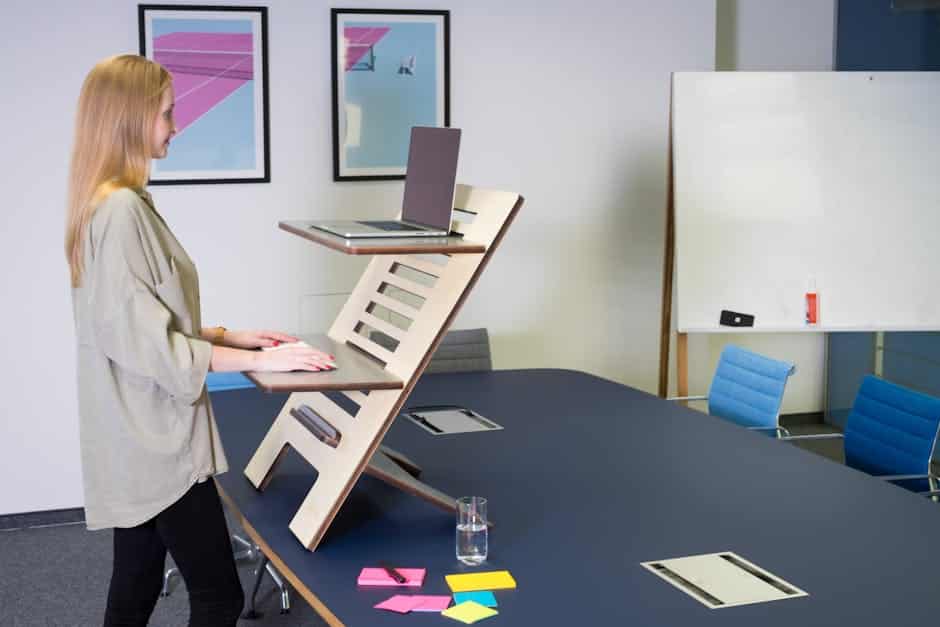
Why an Adjustable Height Work Table With Drawers Belongs in Every Serious Workspace
An adjustable height work table with drawers is one of the most practical upgrades you can make to any workshop, garage, or workspace. Here’s a quick look at the top reasons to consider one:
- Ergonomic flexibility – Height adjusts from as low as 26″ to as high as 48″, letting you sit or stand as needed
- Built-in storage – Drawers keep tools and small parts within arm’s reach, reducing clutter
- Heavy-duty capacity – Models range from 200 lb to 2,000 lb load ratings depending on construction
- Mobility options – Choose locking casters for easy movement or leveling feet for a stable, fixed setup
- Versatile use – Works equally well in garages, repair shops, warehouses, and home offices
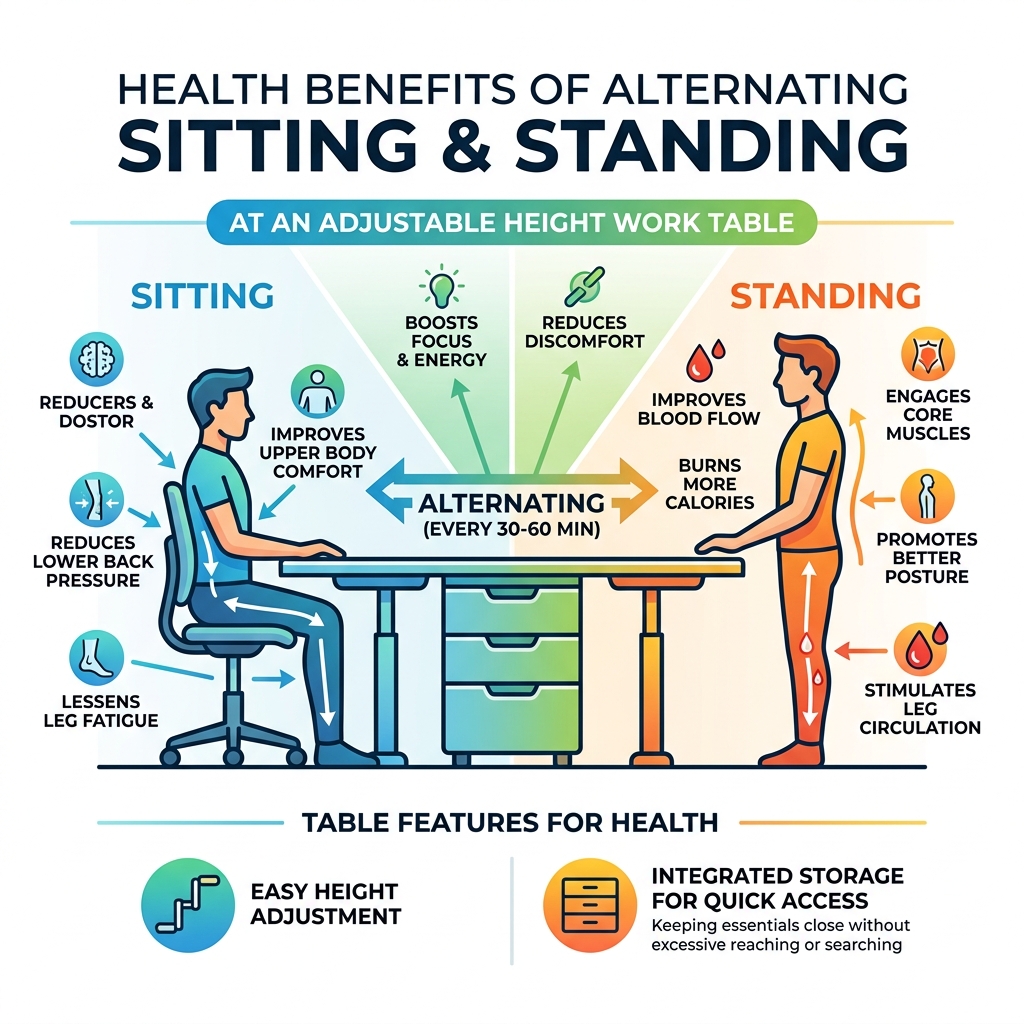
Most people spend hours at a workbench without thinking much about posture. That’s a problem. Staying locked in one position — whether sitting or standing — puts real stress on your back, neck, and joints over time. Research from health experts at the Mayo Clinic consistently shows that alternating between sitting and standing reduces body discomfort, improves blood flow, and boosts focus.
A work table that adjusts in height solves this. Add integrated drawers, and you also eliminate the constant search for tools mid-task. It’s a small change with a surprisingly big impact on how you feel and how much you get done.
Key features of an adjustable height work table with drawers
When we look at what makes an adjustable height work table with drawers truly effective, it comes down to the marriage of structural integrity and mechanical convenience. These aren’t just your standard four-legged desks; they are engineered to handle the vibration of power tools and the weight of heavy components while remaining easy to adjust.
Manual Crank vs. Electric Lift Mechanisms
The “engine” of your table determines how often you’ll actually use the adjustment feature. In our experience, both have their place depending on your environment.
| Feature | Manual Crank Mechanism | Electric/Power Lift |
|---|---|---|
| Adjustment Speed | Slower (requires physical effort) | Fast (button-operated) |
| Reliability | Extremely high; no motor to fail | High, but requires a power source |
| Weight Capacity | Typically 300 lbs – 2,000 lbs | Typically 600 lbs – 1,500 lbs |
| Price Point | More affordable | Premium investment |
| Best For | Garages, shops, and remote areas | Offices, labs, and multi-user stations |
Height Adjustment Range
Standard worktables usually offer a range between 26 inches and 42 inches. However, specialized models can reach up to 48 inches. This range is critical because it accommodates everything from a seated drafting position to a standing assembly height for tall users. Some industrial units adjust in 2-inch increments using pins, while crank and electric models offer “infinite” adjustability within their range.
Solid Wood and Steel Frame Construction
Durability starts with the materials. Most high-quality tables feature a solid wood top, often 1.2 to 1.25 inches thick. Hardwood (like maple) is preferred because it absorbs impact and reduces noise—perfect for hammering or heavy assembly.
Supporting that top is usually a heavy-duty steel frame. We often see 14-gauge steel used in industrial settings, providing a rock-solid foundation that won’t wobble. To ensure these tables last a lifetime in damp garages or busy shops, the steel is typically finished with a powder coating. This provides superior rust resistance and protects against the scratches and dings common in a working environment.
For those looking to optimize their workflow further, more info about office desks with storage for productivity can help you understand how to balance heavy-duty needs with organizational efficiency.
Ergonomic benefits and health impacts of sit-stand workstations
At Dims Finance, we are passionate about science-based ergonomics. The primary reason we recommend an adjustable height work table with drawers isn’t just for the storage—it’s for your longevity.
Posture Correction and Blood Flow
Static posture is the enemy of the human body. When we sit for eight hours, our hip flexors tighten, and our glutes “turn off,” leading to lower back strain. Conversely, standing still for too long can lead to blood pooling in the legs. By using a table that allows for easy transitions, you encourage “micro-movements.” These small shifts in position keep your blood flowing and prevent the muscle fatigue that leads to poor form.
RSI Prevention and Eye Level
Repetitive Strain Injuries (RSIs) often stem from working at the wrong height. If your table is too low, you slouch, putting pressure on your median nerve (hello, Carpal Tunnel Syndrome). If it’s too high, your shoulders shrug, leading to tension headaches.
An adjustable table allows you to bring the work to you. Whether you are soldering a circuit board or typing a report, you can set the surface so your elbows are at a 90-degree angle and your eyes are level with your primary task. This is especially important for those using adjustable standing desks for work from home, where the line between “professional office” and “kitchen table” often gets blurred.
The Productivity Boost
It’s hard to be productive when you’re in pain. Research suggests that alternating between sitting and standing can decrease body discomfort by up to 40%. When you feel better, you work faster and with fewer errors. The psychological benefit of “changing gears” by simply raising your desk can also provide a much-needed mental reset during a long project.
Maximizing utility with integrated storage and mobility
The “drawers” part of an adjustable height work table with drawers is what separates a simple desk from a true workstation.
Storage Capacity and Features
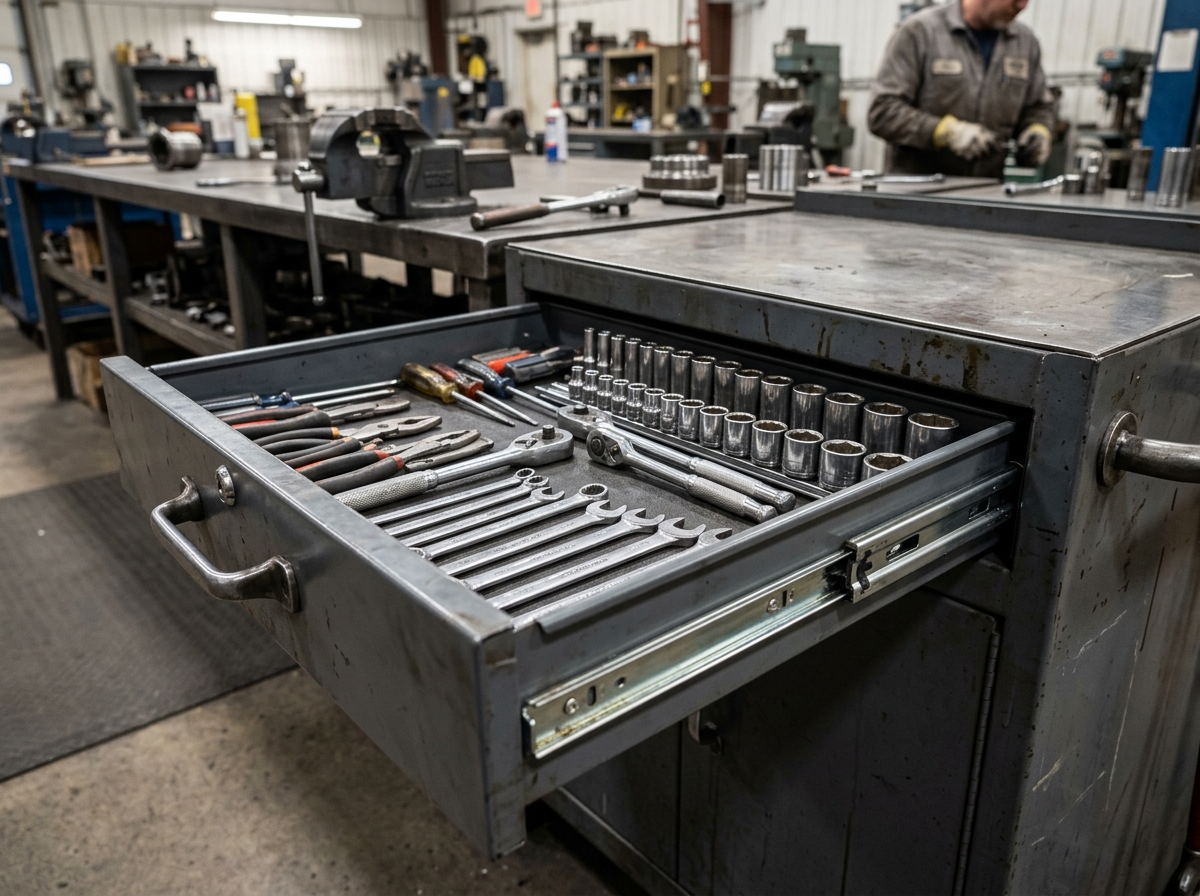
Commonly, these tables feature one or two wide drawers. In high-end models, these drawers can span up to 40 inches in width and hold roughly 35 lbs each.
- Ball-Bearing Slides: Look for drawers with ball-bearing slides; they ensure the drawer opens smoothly even when loaded with heavy wrenches or socket sets.
- Tool Cutouts: Some specialized workshop tables include hole cutouts on the tabletop specifically designed to hold screwdrivers, pliers, and other hand tools, keeping the main surface clear for your project.
- Drawer Liners: While many tables don’t come with them, adding rubber liners prevents your tools from sliding around every time you open the drawer.
Mobility vs. Stability
One of the best design features of modern worktables is the dual-option base. Most ship with both:
- Locking Casters: These 3-inch or 5-inch wheels allow you to roll your entire shop across the room. This is vital for “project-based” layouts where you might need to move the table to accommodate a vehicle or a large piece of furniture.
- Leveling Feet: If your floor is uneven (as most garage floors are), leveling feet allow you to dial in a perfectly flat work surface. They also significantly increase the weight capacity. For instance, a table might hold 300 lbs on wheels but 2,000 lbs on leveling feet.
For those managing a complex electronic setup, integrating desks with cable management for home office solutions can keep your power cords from tangling during height transitions. Additionally, if you find yourself moving your setup frequently, exploring lightweight desks for easy moving can provide alternatives for less intensive tasks.
Crossbar Support
The placement of the lower crossbar is a small detail that makes a big difference. Many tables allow you to install the crossbar in two positions:
- Center Position: Best for “two-sided” access, allowing you to work from either side of the table.
- Back Position: This is our favorite for organization, as it leaves the floor space open to roll a tool cabinet or a chair underneath the table when it’s in the raised position.
Choosing the right model for your specific environment
Not all worktables are created equal. The “best” one depends entirely on what you plan to do on top of it.
Load Ratings and Surface Area
Before buying, calculate the “worst-case scenario” weight. If you’re just doing light crafting or using it as a laptop station, a 200-300 lb capacity is plenty. However, if you plan to mount a vise or work on engine blocks, you need an industrial-grade table with a 1,000+ lb rating.
Surface area also matters. A 46-inch width is great for tight corners, but for large-scale assembly or sewing projects, you might want to look at 52-inch or even 72-inch wide options.
Assembly and Maintenance
Most of these tables ship flat-packed to save on shipping costs. Expect to spend about 45 to 90 minutes on assembly.
- Maintenance Tip: If you have a solid wood top, treat it with a light coat of linseed oil or butcher block conditioner once a year to prevent the wood from drying out or cracking.
- Check the Crank: For manual models, a drop of lithium grease on the internal threaded rod every few years will keep the adjustment feeling like butter.
Selecting the best adjustable height work table with drawers for small spaces
If you’re working in a studio apartment or a cramped shed, look for a “compact” model. Some tables feature foldable legs or a smaller 24-inch depth, making them much easier to tuck away. If budget is a primary concern for your small space, there are many affordable standing desks for small spaces that offer basic height adjustment without the heavy-duty price tag.
Heavy-duty applications for an adjustable height work table with drawers
In industrial shops, the requirements change. A welding station, for example, requires a table that can handle heat and significant weight. Hardwood tops are excellent here because they don’t warp like thin metal might, and they can absorb the vibration of grinders. For these high-intensity environments, a 2,000 lb capacity table is the gold standard, providing the safety and stability needed for professional fabrication.
Frequently Asked Questions about adjustable workbenches
What is the typical height adjustment range for these tables?
Most tables adjust from a minimum of 26 inches (standard sitting height) to a maximum of 42 to 48 inches (standing height). If you use casters, they usually add about 3 inches to both the minimum and maximum height.
Can these work tables handle heavy machinery and vises?
It depends on the model. Heavy-duty industrial tables with 14-gauge steel frames and 1,000+ lb capacities can easily handle vises and bench grinders. However, lighter-duty “home” models (300 lb capacity) often have an overhang that might not be designed for the torque of a large vise. Always check the manufacturer’s recommendation before drilling into the wood top.
Are manual crank systems more durable than electric motors?
Generally, yes. A manual crank uses a simple threaded rod and gear system that is very difficult to break. Electric motors are convenient, but they can burn out over years of heavy use or if the table is frequently overloaded. For a “forever” workbench in a garage, we usually lean toward the manual crank.
Conclusion
Upgrading to an adjustable height work table with drawers is an investment in both your productivity and your health. By providing the flexibility to change positions throughout the day, these workstations help prevent the chronic back pain and fatigue that so often plague DIYers and professionals alike.
At Dims Finance, we believe that your workspace should work for you, not against you. Whether you are setting up a high-tech home office or a rugged backyard shop, choosing a table with the right weight capacity, storage features, and ergonomic range is key. If you’re looking for more ways to optimize your setup, check out our guide on the top-rated home office desks 2025 or find the best adjustable standing desks for work from home to ensure your environment is as healthy as it is functional.