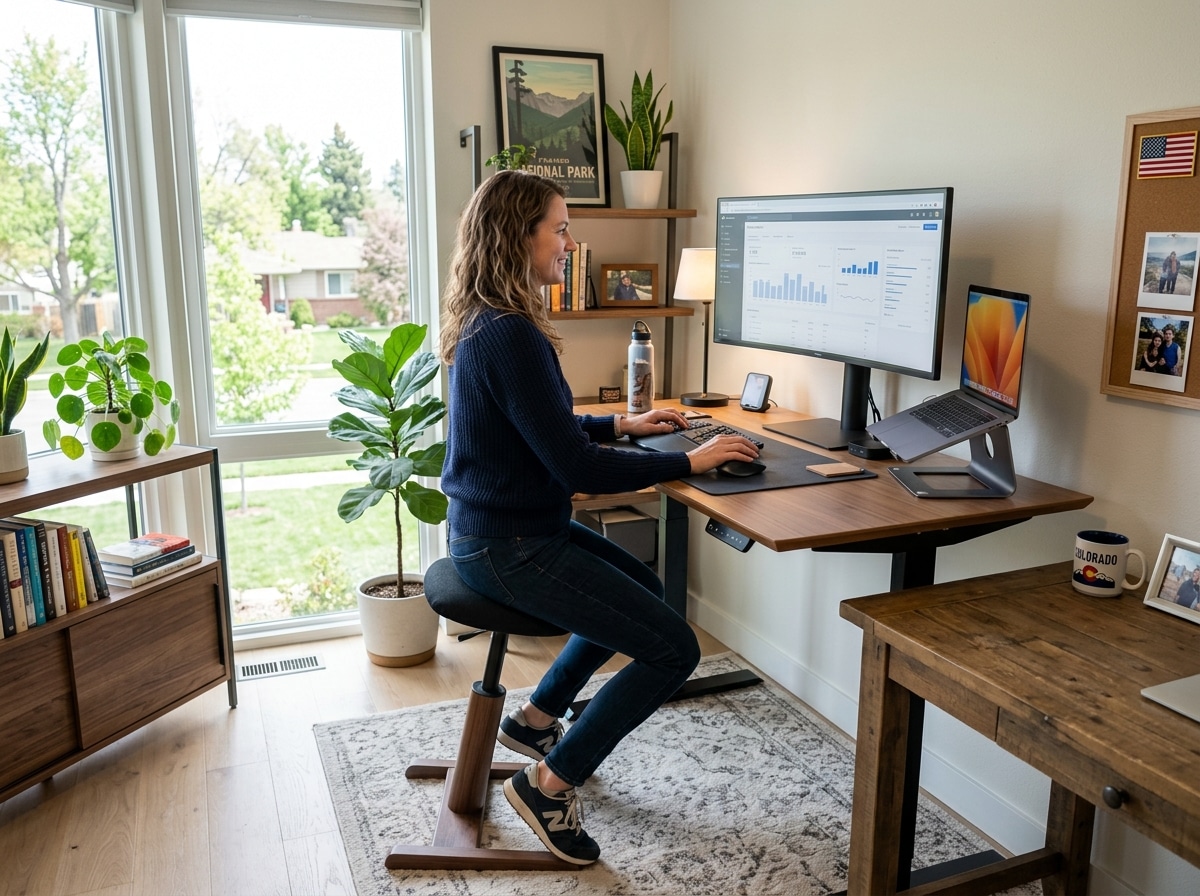
Why “Sitting Disease” Is a Real Threat to Desk Workers
An active sitting desk chair is a seat designed to keep your body in constant, subtle motion — rather than locked in one static position for hours on end.
Quick answer: What is an active sitting desk chair and why does it matter?
- Encourages small, continuous movements while you sit (rocking, tilting, balancing)
- Engages your core, back, and leg muscles passively throughout the day
- Reduces the health risks linked to prolonged static sitting
- Can improve posture, reduce back pain, and even burn more calories than a regular chair
- Suits office workers, home desks, classrooms, and anyone with back or RSI issues
If you spend most of your day at a desk, your chair may be quietly working against you.
Research over the last 15+ years has made it clear: prolonged sitting is genuinely bad for your health. It’s been linked to increased risk of obesity, type 2 diabetes, and cardiovascular disease. Americans now sit an average of 11 hours per day — and the damage from that adds up, even if you exercise regularly.
The problem isn’t just how long you sit. It’s how still you sit.
Traditional office chairs are built to keep you fixed in one position. That might feel stable, but it also means your muscles switch off, your circulation slows, and your spine gradually loses its natural alignment. Over time, that takes a real toll — especially on people already dealing with back pain, repetitive strain injuries, or carpal tunnel syndrome.
Active sitting chairs work differently. They introduce what ergonomists call micro-movements — tiny, often unconscious shifts in your body that keep your muscles gently engaged and your blood flowing. Think of it as the difference between parking your body and keeping it idling.
Designer Peter Opsvik, who pioneered several active seating concepts, put it simply: “The best position is always the next one.”

What is an Active Sitting Desk Chair?
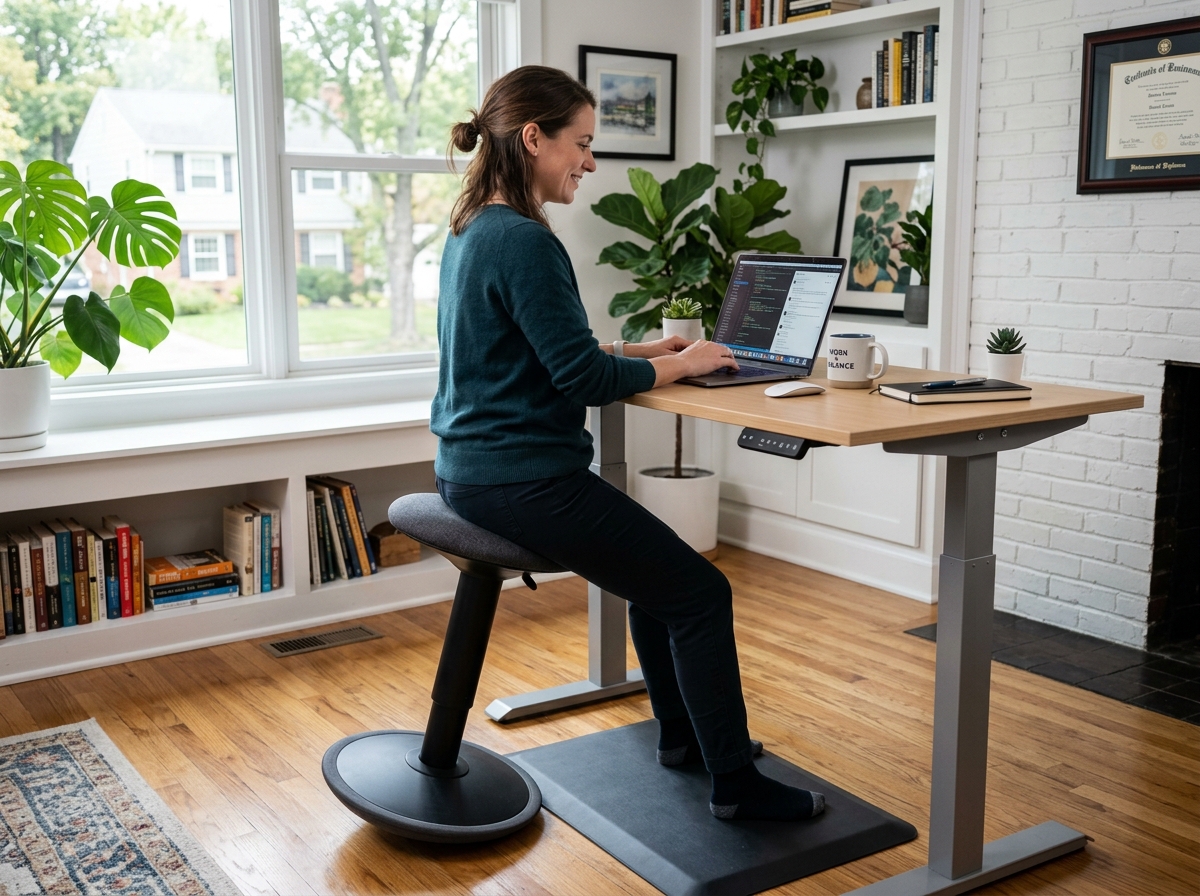
To understand an active sitting desk chair, we first need to look at what it isn’t. A traditional office chair is designed for “static loading.” It has a backrest, armrests, and a deep seat pan intended to hold you in a 90-degree-angle “L” shape. While this feels supportive initially, it often leads to slumping, as our core muscles eventually give up and let the chair (and gravity) take over.
In contrast, dynamic seating—the core philosophy behind active chairs—assumes that the human body is meant to move. These chairs lack the restrictive “cradle” of traditional furniture. Instead, they use mechanisms like rounded bases, 360-degree pivots, or flexible joints that require your body to maintain its own balance.
How it Differs from Traditional Chairs
When you sit in an active chair, your pelvis is encouraged to tilt slightly forward. This alignment stacks your vertebrae naturally, mimicking the spine’s position when standing. Because the chair “wobbles” or tilts, your deep stabilizer muscles (the ones that wrap around your spine and abdomen) must stay active to keep you upright.
If you are currently evaluating your workspace, our ergonomic-office-chair-buying-guide can help you determine if a dynamic or traditional setup is right for your specific workflow.
Common Movement Mechanisms
Active chairs aren’t just “unstable” furniture; they are precision-engineered tools. Some common mechanisms include:
- Articulating Pedestals: Found in stools like the Active Seat | Standing Desk Chair | Vari®, these allow the seat to lean in any direction, engaging the lower body.
- Spring-Loaded Suspensions: These follow your natural motion without requiring manual lever adjustments.
- Pivot Points: Some high-end models, like the Corechair Classic Active Seating I CoreChair by PhilZen – Phil Zen, offer up to 14 degrees of multi-directional movement with adjustable resistance.
Health Benefits: Posture, Back Pain, and Calorie Burn
The most immediate benefit people notice when switching to an active sitting desk chair is the relief of “desk fatigue.” By encouraging movement, these chairs prevent the muscle stiffness that occurs when we stay in one spot for too long.
Spinal Alignment and Back Health
Traditional chairs often feature lumbar supports that treat the symptom of slouching rather than the cause. Active chairs address the root by stabilizing the pelvis. When the pelvis is supported and allowed to tilt naturally, the rest of the spine follows suit. This reduces the 90-degree “hinge” pressure on the lower back, which is a major contributor to chronic pain. For more on how to set up your station, check out our office-chair-tips-for-posture-improvement.
The Calorie Burn Factor: NEAT
One of the most exciting aspects of active seating is its impact on your metabolic rate. This is measured through NEAT (Non-Exercise Activity Thermogenesis)—the energy we expend for everything we do that isn’t sleeping, eating, or sports-like exercise.
Research, including studies from the Mayo Clinic, suggests that active sitting can increase caloric expenditure by 20% to 30% compared to sitting still. While you won’t drop 10 pounds in a week just by changing your chair, over a year, those extra calories burned while typing can make a significant difference in weight management and cardiovascular health. It’s like walking at a very slow pace (about 2 mph) while you’re actually finishing a spreadsheet.
Improved Blood Circulation
Static sitting causes blood to pool in the legs and slows down the delivery of oxygenated blood to the brain. Because active chairs keep your legs and core engaged, they act as a “second heart,” helping to pump blood back up through the body. This keeps your limbs from falling asleep and—perhaps more importantly—keeps your brain sharp.
Improving Focus with an Active Sitting Desk Chair
We often think of movement as a distraction, but for many, it’s a cognitive necessity. This is especially true for individuals with ADHD or those who naturally “fidget.”
The gentle rocking or balancing motion of an active sitting desk chair provides a physical outlet for restless energy, which can actually improve concentration. By satisfying the body’s need for movement, the brain is freed up to focus on the task at hand. Increased blood and oxygen flow further boost alertness, making these chairs excellent ergonomic-chairs-for-long-work-hours for deep-focus sessions.
Popular Types of Active Seating Solutions
There is no “one-size-fits-all” in active seating. The market has exploded with designs tailored to different body types and work styles.
| Chair Type | Best For | Movement Style |
|---|---|---|
| Wobble Stools | Standing desk users, quick tasks | 360-degree tilt and pivot |
| Kneeling Chairs | Posture correction, hip opening | Forward tilt, weight on shins |
| Balance Ball Chairs | Core strength, home offices | Bouncing and micro-balancing |
| Saddle Stools | Precision work (dentists, artists) | Wide hip angle, upright spine |
| Cross-Legged Chairs | Flexibility, yoga practitioners | Multi-position (squat, seiza) |
| Active Task Chairs | Professional offices | Subtle internal rocking |
Wobble Stools and Perch Seats
These are the “minimalists” of the chair world. Options like the Active Seat | Standing Desk Chair | Vari® are designed to be used in a “perching” position—halfway between sitting and standing. They take up very little space and are perfect for collaborative environments.
Kneeling and Saddle Chairs
Kneeling chairs have been around for over 40 years, pioneered by designers like Peter Opsvik. They shift your weight to your shins and tilt your pelvis forward. Saddle chairs, like the Chair SpinaliS Smart Active Sitting, mimic the posture of a horseback rider, which is widely considered one of the healthiest ways to sit for long periods.
Active Sitting Platforms
For those who like to sit in non-traditional positions, platforms like the Standard Size Higher Ground Active Sitting Platform Chair allow you to sit cross-legged or in a squatting position while still working at a standard desk. These are particularly popular with neurodivergent thinkers and wellness enthusiasts.
If you’re looking for something specifically for your living room or den, see our list of best-ergonomic-office-chairs-for-home-use.
Choosing the Right Active Sitting Desk Chair for Your Needs
When shopping, keep these key features in mind:
- Height Range: Ensure the chair can go high enough for a “perch” position or low enough for your desk.
- Weight Capacity: Most active chairs support between 225 lbs and 350 lbs.
- Base Stability: Look for anti-slip rubber bases to prevent the chair from sliding out from under you.
- Materials: Breathable mesh or high-quality foam padding is essential for comfort during long hours.
- Lumbar Options: Some models, like the Chair SpinaliS Hacker Active Sitting, offer a backrest for those who aren’t ready to go fully backless. For more options, explore office-chairs-with-lumbar-support.
Safety Considerations and Ergonomic Integration
Switching to an active sitting desk chair is a bit like starting a new workout routine. You shouldn’t expect to sit in one for 8 hours on day one.
The Adaptation Period
Because these chairs engage muscles you might not have used in years, initial muscle soreness is common. We recommend a gradual transition:
- Start with 20–30 minutes in the active chair.
- Switch back to your traditional chair for the rest of the hour.
- Gradually increase the time as your core strength builds.
Stability and Floor Surface
Active chairs, especially those with rounded bases, require a stable floor. Using them on a thick, shaggy carpet can be difficult and potentially unsafe. A hard floor or a thin, firm chair mat is ideal.
Integration with Desks
Active chairs pair beautifully with adjustable-standing-desks-for-work-from-home. The ability to switch between sitting, perching, and standing creates a “movement loop” that keeps your body from becoming stagnant.
Frequently Asked Questions about Active Seating
Can active sitting replace a traditional workout?
In short: No. While an active sitting desk chair increases your metabolic rate and burns more calories than a static chair, it is not a substitute for cardiovascular exercise or heavy strength training. Think of it as a way to raise your “baseline” activity level rather than a replacement for the gym.
How long does it take to adjust to an active chair?
Most users find that the initial “new muscle” soreness disappears within one to three weeks. Once your core and back muscles strengthen, you will likely find that you can sit for longer periods without the backaches associated with traditional chairs.
Are active chairs better than standing desks?
They aren’t “better”—they are different tools for the same goal: movement. Standing all day can be just as hard on the body as sitting all day (leading to varicose veins and joint pressure). The best ergonomic setup is a hybrid approach where you change positions every 30 to 60 minutes.
Conclusion
At Dims Finance, we believe that your workspace should be an engine for health, not a drain on it. The move toward active sitting is more than just a trend; it’s a science-based response to the sedentary epidemic that affects millions of desk workers.
By choosing an active sitting desk chair, you are making a long-term investment in your spinal health, metabolic wellness, and daily productivity. Whether you choose a wobble stool for your standing desk or a specialized saddle chair for your home office, the goal remains the same: keep moving.
Ready to transform your workspace? Explore our full range of ergonomic office furniture and take the first step toward a healthier, more active workday.